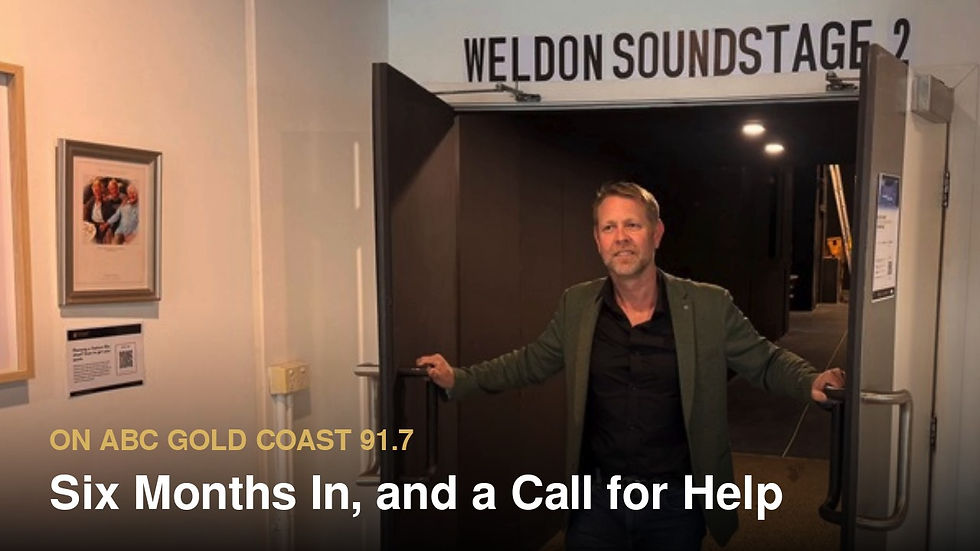
The Gold Coast Screen Production Report
What's happening in the Gold Coast screen industry, and what can happen next: more local stories, more commercial content, more jobs, and a city that owns a bigger share of the work it makes.
Where this comes from: five years, one mission, and what it taught me
Nobody builds a studio by accident. This one took a decade of learning the whole business of screen and, since 2021, five years on a single mission: a locally owned studio on the Gold Coast.
I learned production the long way:
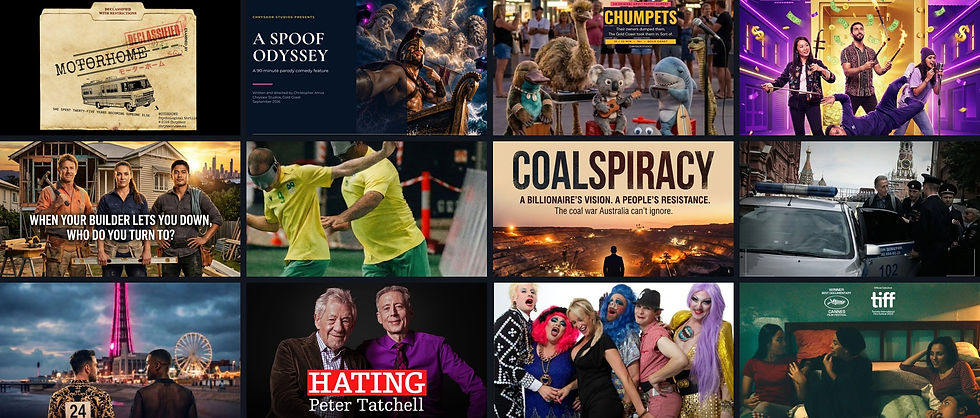
Hating Peter Tatchell, which I wrote, directed and produced, featuring Ian McKellen and Stephen Fry, with Elton John and David Furnish as executive producers, and three years exclusive on Netflix worldwide.
Screen Producers Australia's Ones to Watch, mentored by Tony Ayres.
Screen Australia's Screen Enterprise program, and three months inside World of Wonder in Los Angeles, where Hollywood was demystified and I saw how much can be made under one roof in the middle of a city.
Four Daughters, the Academy Award nominated film I released in Australia and New Zealand.
Creative Plus Business, the three-month program for creative founders with Monica Davidson, which stress-tested the model behind the studio.
Development to distribution, the whole cycle, and the business to run it.
I had seen the model work in Los Angeles and in London: a studio in the middle of a city, with stages, offices and post under one roof, where a small team can take a story from idea to delivery. The Gold Coast needed one. I had been saying so to industry leaders for four years before I found the building to prove it.
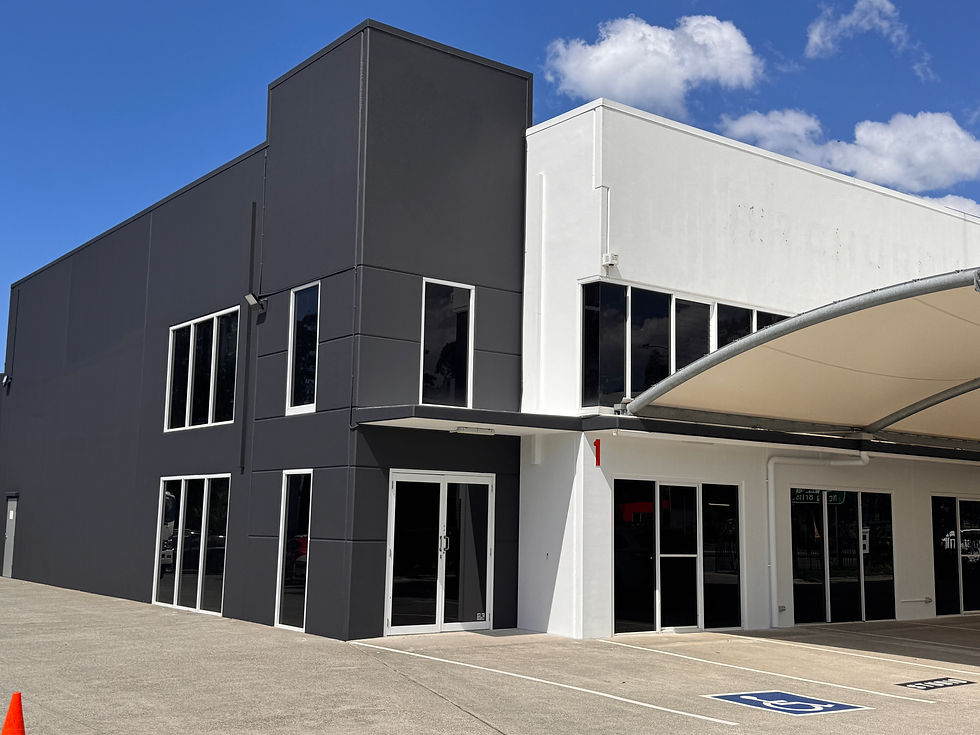
It took dozens of site visits to find it: a converted church in Varsity Lakes that could hold two stages under one roof. A State capital grant was matched dollar for dollar with my own money, and the build began.
Download the full report below.
The build
The build was where the plan met reality. Like many owner-builders, I learned the hard way. Early advice cost more than it saved, and some contractors are now matters for the building regulator rather than for this report.
Each time, I corrected course, kept the site moving and protected the grant, and a licensed team finished the job. The studio opened in April 2026, six months late and a great deal dearer.
The overrun ate the marketing budget I had set aside for launch. So I opened the doors with almost no marketing money and one founder selling, on LinkedIn, in newsletters and by word of mouth. Fifty site visits and nine productions in six months came almost entirely from direct outreach.
What it proves
The studio works. The people who walk through it say the same two things: they wish it had been here earlier, and they want to shoot here next year.
It is financially viable at a fraction of its capacity. It has a slate of its own, and fifty other Gold Coast screen businesses around it who want the same future. What it has lacked is not demand but resources, at the moment it needed them most.
That is fixable, and this report is about fixing it with the city rather than alone. I am ready to make my own productions here now, and the studio comes first.
What's happening
Queensland led the nation in screen production for the first time in 2024/25. A record $925 million, 34% of the national market, and more than 5,000 cast, crew and creatives employed every year.
Most of that work happened here. The Gold Coast carries 39% to 71% of the State's drama spend, and screen is one of the City's six priority growth sectors.
The city's infrastructure is growing on every tier at once.
Village Roadshow Studios, the largest studio lot in the Southern Hemisphere: nine sound stages, more than 155 productions since 1988 and 18 support businesses on the lot.
Shadowbox Studios, the City's preferred proponent for a 22-hectare precinct at Yatala of up to ten sound stages, with phase one planned for 2028.
Pinnacle Studios: two sound stages, virtual production through PROXi, more than 15 major productions, and a new stage complex due in late 2026.
HOTA anchors the arts, and the City is seeking a development partner for the Miami Arts Depot, a planned creative precinct with production space for film, games and visual effects.
AACTA stays on the Gold Coast to 2028, and Brisbane 2032 names creative production as a procurement category.
The people and the supply chain are here too. Bond, QUT, Griffith, SAE and TAFE Queensland at Coomera turn out the next generation of crew and creatives every year.
Independent businesses fill out the rest: The Rebel Fleet in production services, FIN in visual effects, Myriad Studios in 3D scanning, Cine2481 in camera and grip, Film Freelancers and Generate Crew for crew, Screen Well for crew wellbeing, and the city's stunt teams. Together they can staff a whole shoot locally. Brisbane, under an hour up the M1, adds a second crew base.
The big shoots bring the world here. The work in between keeps the crews here.
In 2025 Village Roadshow Studios hosted Voltron for Amazon MGM Studios, the second season of Monarch: Legacy of Monsters for Apple TV+, Godzilla x Kong: Supernova, Subversion with Chris Hemsworth, and Netflix's The Golden Ticket. Together they supported more than 2,000 local cast and crew jobs (Ausfilm).
Between big shoots, those same crews and suppliers need work: commercials, music videos, local features and series, and virtual production days. That is the work a mid-scale, open-access stage carries.
And in April, a locally owned studio joined them
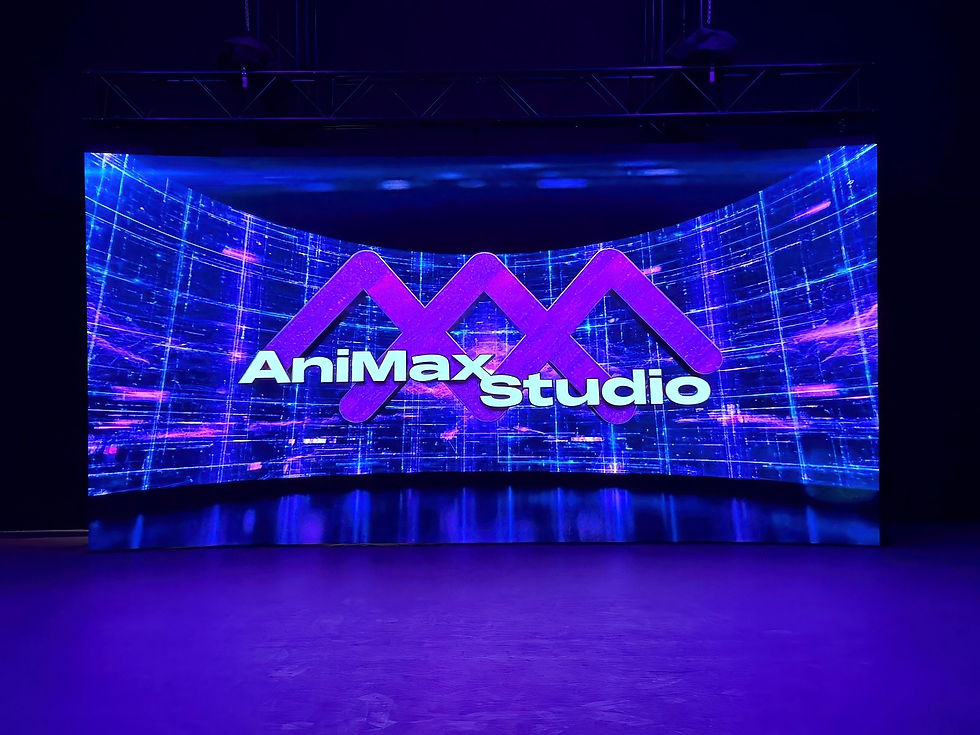
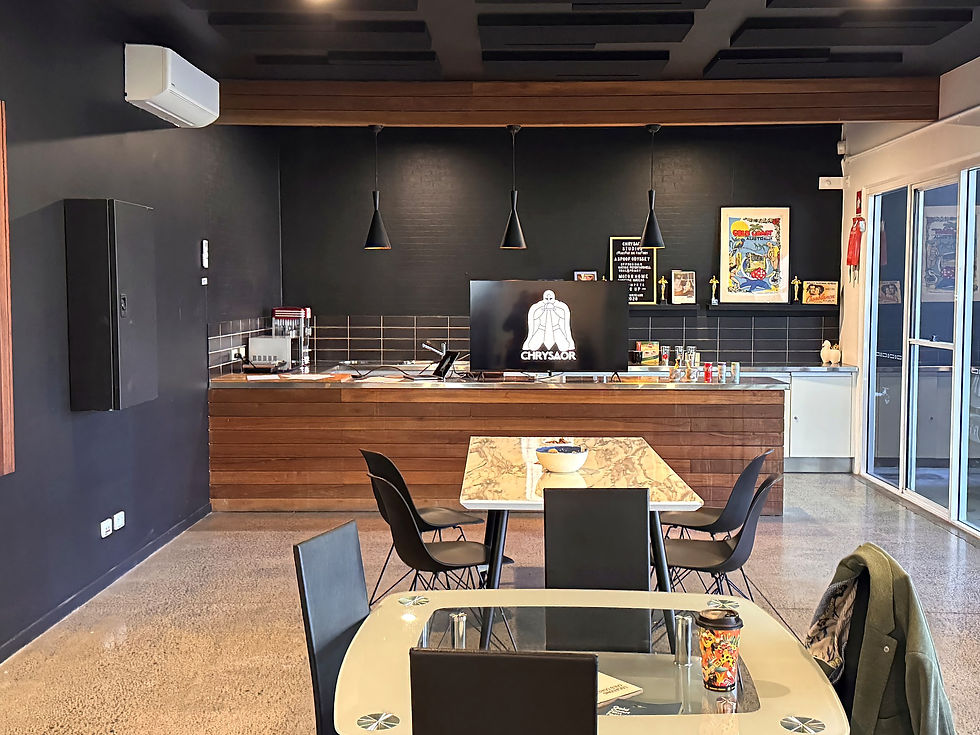
Chrysaor Studios in Varsity Lakes has two stages under one roof, including a permanent open-access Animax LED volume for virtual production, 15 minutes from Gold Coast Airport. It was built with private money matched by the State, and it is certified as a social enterprise with at least half of its profit bound to local screen work.
Nine productions in six months, for clients including Netflix, Stan Originals and Paramount+. A steady stream of producers, brands and creatives are in conversation about using it, with virtual production leading the enquiries.
The flywheel: half the profit goes back in. At least half of Chrysaor's profit is bound to local screen work: the slate, student placements, the Screen Association and the Twinning Project. Bookings fund local stories, local stories bring more bookings, and the city keeps a bigger share of the work it makes.
Every stage that opens here lifts every other one. The city wins when the work stays.
The opportunity
In the same year Australian screen spend hit a record, the number of Australian titles going into production fell from 89 to 71. Big international shoots fill the stages. Local stories, commercial content and independent producers get squeezed out.
That gap is the opportunity, in three parts:
Local made stories. Productions attracted from outside spend here once and leave. Productions owned here spend here every time, and keep the rights, the profits and the next project in the city.
Commercial content. Brands, music, creators, corporate, simulation and training content do not wait for government funding. They need an affordable stage, fast turnaround and a crew they can trust. That market is the fastest to grow, and it is barely served.
Interstate business. Sydney and Melbourne producers pay 30% to 40% more for a stage. A Gold Coast stage a short flight away, with a production office and a local crew, is a reason to bring the whole shoot north.
Access is the strategy. Make the Gold Coast the easiest and most affordable place in Australia to make content, and the content comes. Anyone who is creative is welcome here.
What a studio and a volume give you
One address, every scene. Your lighting rig is still standing in the morning. No permits, no unit moves, and weather never costs you a day.
The LED volume changes the location between takes: driving and travel shots without a road closure, final pixel in camera so less goes to post, and golden hour that holds all day.
Air conditioned stages, sound you control, lock up at wrap, 22 bays of monitored parking and one load-in off the street. The full guide is at chrysaor.com.au/virtual-production, and the facility brochure has the specs.
What can happen: five things already moving
1. The Gold Coast Screen Association. More than fifty owner-operated screen businesses coming together as one voice, with a shared register of crews, gear, facilities, grants and buyers. Three town halls over six months, the first at Chrysaor Studios. A supply chain the city can see, count and sell.
2. Chrysaor Studios: affordable, open access. Two stages and a permanent LED volume, open to any production at any scale. Published rates, with no admin fee, no weekend loading and no public holiday surcharge.
We also offer:
introductions to the 21 Gold Coast suppliers on our local services directory, from Film Freelancers for crew to post, grip, audio and makeup
feasibility and budget help
a free review of any producer's one-pager
We have done this for many producers and filmmakers planning to shoot here in 2027. Tell us your budget: we would rather find a way than see a stage sit empty.
3. The Gold Coast Twinning Project. We scanned our own studio in twenty minutes and turned it into a photoreal 3D model that runs on the LED volume. Now we want to do that for the Gold Coast itself: a shared library of Gold Coast locations, built for virtual production and owned by a neutral industry body with university and government partners.
Screen first, then tourism, 2032 and training. One capture, many uses, with the city owning its own digital likeness.
4. The Chrysaor production slate. Eight original titles, $17.5 million in development, every one planned to shoot here with local crews:
Motorhome, a psychological thriller built for the LED volume
A Spoof Odyssey, a parody comedy feature
Chumpets, an adult puppet series set on the Gold Coast
Aussie Buskers and Builder Rescue Gold Coast, two TV formats built to travel
Unseen Victories, Coalspiracy and OppRussian, documentaries headed for international festivals
At the industry multiplier, that is $44 to $52 million of local activity and around 95 cast, crew and creative jobs, with the rights staying here.
5. A local IP uplift. Local stories developed, owned and financed from the Gold Coast, with the Association's register pointing producers to the grants, commissioners and sales agents that get them made. Returnable series and franchise formats that keep spending here year after year.

How the City can help, at little cost
Point Screen Attraction Program productions to Gold Coast stages for stage days, second unit and pick-ups.
Make the City's own content here: HOTA, Experience Gold Coast, 2032 and destination campaigns on a local stage with local crews.
Co-convene the Screen Association town halls and support the register.
Give local stage operators a seat in screen and economic development planning and the 2032 creative pipeline.
Help the Twinning pilot happen. The City is a direct beneficiary.
Come and be part of it
Producers and filmmakers: send us your dates, your budget or your one-pager. We will tell you honestly what is feasible, introduce you to local suppliers, and find a way to get you on a stage.
Brands, bands and creators: a day on an LED volume changes what you can make. Come and see it, and bring your idea. We will help you cost it.
Gold Coast screen businesses: join the Gold Coast Screen Association and the local services directory. One voice, one register, more work.
Partners and sponsors: the studio is open to sponsorship and partnership, from naming, equipment and training to content partnerships and the City's own content. We are happy to have the financial conversation in the open. Ask for the numbers and you will get them.
Send a project through the enquiry form, or read more about me on Wikipedia.
Download the full report below.
Christopher Amos, Founder and CEO, Chrysaor Studios
+61 423 729 245 · chris@chrysaor.com.au · chrysaor.com.au
An independent report by Chrysaor Studios, not a publication of the City of Gold Coast or any government agency. Industry figures from the Queensland Government, QUT and Screen Australia. Chrysaor figures indicative, pending finalisation of the FY2026 accounts. Multiplier and jobs figures are industry ratios, not the company's own results. Not an offer of any kind.