Australians value our stories. The hard part is helping them find us. What Screen Currency 2026 means for a studio like Chrysaor.

Screen Australia has released Screen Currency 2026, its first full read on the value of the Australian screen and games sector in a decade. It runs to five reports, built on research with more than 13,750 people. It is the clearest evidence base the industry has had in years, and it lands on a contradiction that anyone building in this sector already feels in their bones.
We love Australian stories. We are barely watching them.
The economic case is settled. Screen and games contributed over $11 billion to the economy in 2023/24, more than sport and recreation, and employed close to 70,000 people. Exports reached $1.6 billion, pulling tourism and trade along behind them.
The cultural case is settled too. 84 per cent of Australians say access to local content is important, and three in four say our content is as visually distinctive and well made as anything from overseas.
Then comes the gap. Six in ten Australians spend less than a third of their viewing time on local content, outside news and sport. Only 36 per cent say Australian content is even easy to find. As IF Magazine put it this week, we value it in principle, we value it when we watch it, but most of us rely on it landing in our path rather than going looking for it.
That is not an audience problem. It is a discoverability problem, and it is now the whole game.
Being available is not the same as being seen.
Screen Producers Australia made the sharpest point in response: putting Australian content somewhere inside a streaming catalogue is not the same as making it visible to Australian audiences. Discovery today runs on algorithms, feeds and recommendations, not broadcast slots. When origin is not what drives a click, our stories have to earn attention on production value, on distinctiveness, and on being findable at the exact moment someone is deciding what to watch.
Younger audiences make this urgent. They move freely across streaming, social, gaming and short form, and they find what they love globally. If Australian content cannot compete for that attention, it does not matter how important people say it is.
The quieter finding, and the one I care about most.
Underneath the headline numbers sits the structural story. The sector runs on small, young businesses. Most Australian screen companies have been operating less than ten years, with a median of four staff. Flexible and inventive, but light on bargaining power and light on capital.
And here is the number that should stop everyone. On a typical project at first release, 45 per cent of screen businesses hold no equity or IP at all. The value they create flows straight out the door, often through cost-plus deals where a global platform funds the work and keeps the rights. Screen Currency is blunt that future success depends on these businesses building and keeping their IP. The same report admits that keeping it has never been harder.
This mirrors the Olsberg SPI capacity analysis earlier this year, which found the same thing: an industry of small, project-based companies that struggle to grow into stable enterprises and sit dangerously exposed to global market forces.
What we built Chrysaor to do about it.
Chrysaor exists for exactly this moment. Not to chase the biggest budgets, but to give smaller producers the infrastructure to make elevated, competitive work without a Hollywood cost base.
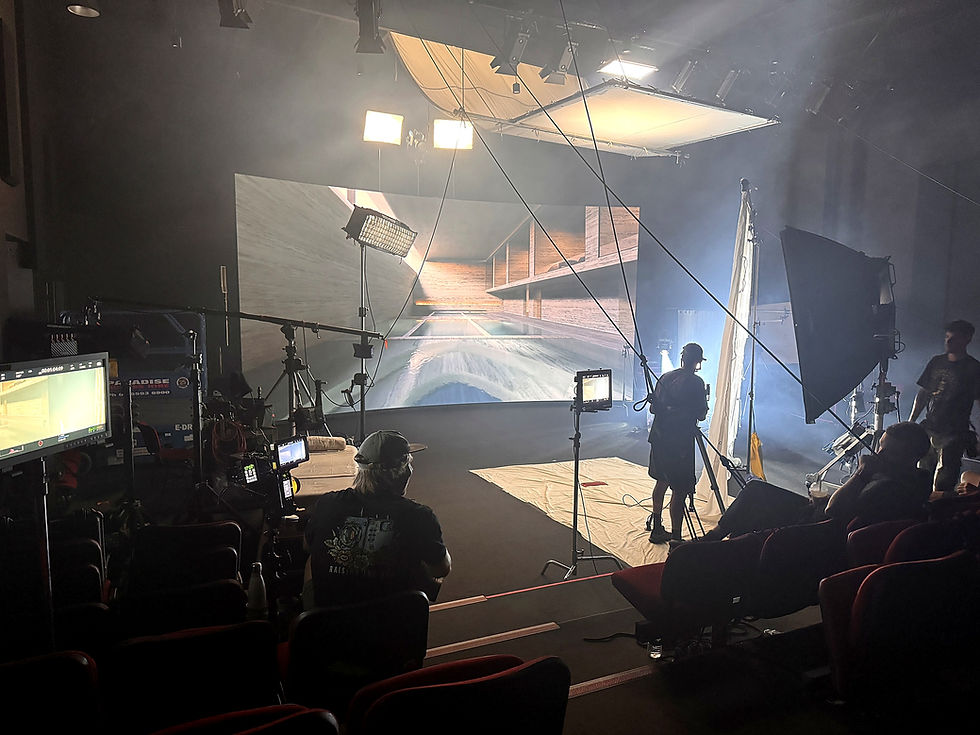
That means affordable stages on the Gold Coast. It means Queensland's only permanent open-access LED volume, so a team can build a virtual production world and set a story anywhere on earth without leaving Varsity Lakes. Content built to travel is content that can earn its place in a global feed and bring export dollars home.
It also means a different ownership model. As Australia's first Social Traders certified social enterprise film studio, we reinvest at least half of our profits into pathways for emerging screen practitioners from underrepresented backgrounds. We are trying to change who gets to make Australian content, and to help the businesses that make it hold on to what they create.
Screen Currency confirms the demand is there and the value is real. The task now is connection: better discoverability, stronger IP retention, and infrastructure that lets small Australian companies punch above their size.
It is, as Screen Australia says, an industry worth investing in. We agree. We are building for it every day.
Read the full Screen Currency 2026 report: https://screencurrency.screenaustralia.gov.au/